Showing posts with label Microchip. Show all posts

Thursday, 28 May 2015

PIC32 Config Bits for 40 mHz with internal Fast RC oscillator


BlinkLED.c
ConfigBitsBlinkLED.c
/*********************************************************************
 *
 *              CONFIG BITS W/ BLINKING LED example
 * The PIC32MC250F128x is a nice little chip that boosts up to 50MHz. 
 * For applications where timing can be more lax, the use of the internal 
 * Fast RC oscillator is a good option to minimize component count, specially 
 * if you want simpler designs.
 * So, here are the config bits to have it running at 40 MHz with internal 
 * FRC oscillator .
 * The internal Fast RC Oscillator frequency is 8MHz and configured to be used 
 * with PLL; FRC(8MHz)/ FPLLIDIV (2 ) *FPLLMUL (20) /FPLLODIV (2) = 40MHz 
 * Frequency for the peripheral bus clock is left at same as the System Clock 
 * ( TPB=System Clock/PBDIV), as the divisor used is 1 (PBDIV=1)= 40MHz.
 * Also , FWDTEN = OFF // Watchdog Timer Enable OFF, and #pragma config JTAGEN = OFF 
 * // JTAG Enable OFF should be considered for use of the ports assigned to the
 *  JTAG port ( PORTB pins in this case-see datasheet for more info)
 * 
 * 
 *
 *********************************************************************
 * FileName:        ConfigBitsWLedBlink.c
 *
 * Processor:       PIC32MX250F128B
 * Dev Board:       Microstick II
 * Complier:        MPLAB C32 v2.01 or higher
 *                  MPLAB IDE v8.73 or higher
 *
 * Software License Agreement
 *
 * THIS SOFTWARE IS PROVIDED IN ANAS IS” CONDITION. NO WARRANTIES,
 * WHETHER EXPRESS, IMPLIED OR STATUTORY, INCLUDING, BUT NOT LIMITED
 * TO, IMPLIED WARRANTIES OF MERCHANTABILITY AND FITNESS FOR A
 * PARTICULAR PURPOSE APPLY TO THIS SOFTWARE. THE COMPANY SHALL NOT,
 * IN ANY CIRCUMSTANCES, BE LIABLE FOR SPECIAL, INCIDENTAL OR
 * CONSEQUENTIAL DAMAGES, FOR ANY REASON WHATSOEVER.
 *
 *
 * Author       Date            Comment
 *~~~~~~~~~~~~~~~~~~~~~~~~~~~~~~~~~~~~~~~~~~~~~~~~~~~~~~~~~~~~~~~~~~~~
 *  RB        28/5/2015         Led should blink on and off.
 * 
 ********************************************************************/
#include < xc.h > // Blog code Bug : Shorten spaces to match <xc.h>
#include < plib.h > // Shorten spaces to match <plib.h> 
#include < p32xxxx.h >  // Shorten spaces to match <p32xxxx.h>
//#pragma config FPLLMUL = MUL_20, FPLLIDIV = DIV_2, FPLLODIV = DIV_2, FWDTEN = OFF
//#pragma config POSCMOD = OFF, FNOSC = FRCPLL, FPBDIV = DIV_1
#pragma config   JTAGEN    = OFF    // JTAG Enable OFF
#pragma config   FNOSC     = FRCPLL // Fast RC w PLL 8mHz internal rc Osc
#pragma config   FPLLIDIV  = DIV_2  // PLL in 8mHz/2 = 4mHz
#pragma config   FPLLMUL   = MUL_20 // PLL mul 4mHz * 20 = 80mHz 24??
#pragma config   FPLLODIV  = DIV_2  // PLL Out 8mHz/2= 40 mHz system frequency osc
#pragma config   FPBDIV    = DIV_1  // Peripheral Bus Divisor
#pragma config   FCKSM     = CSECME // Clock Switch Enable, FSCM Enabled
#pragma config   POSCMOD   = OFF    // Primary osc disabled
#pragma config   IESO      = OFF    // Internal/external switch over
#pragma config   OSCIOFNC  = OFF    // CLKO Output Signal Active on the OSCO Pin
#pragma config   FWDTEN    = OFF    // Watchdog Timer Enable:
//
#define GetSystemClock()       (40000000ul)
#define GetPeripheralClock()    (GetSystemClock()/(1<<OSCCONbits.PBDIV))// 

main() {
    // Configure performance settings without changing PBDIV
    SYSTEMConfig(GetSystemClock(), SYS_CFG_WAIT_STATES | SYS_CFG_PCACHE); 
    //Port Config
    mPORTAClearBits(BIT_0); //PORTA Bit 0 Clear bits to ensure light is off.
    mPORTASetPinsDigitalOut(BIT_0); //Set port RA0 as output
    // Variables
    int i;
    int j;

    while (1) { //main loop

        j = 100000;

        while (j--) { .
            mPORTAToggleBits(BIT_0); //Toggle light status. (Can be viewed in LATA SFR)

            i = j; //Time to wait in between toggle.
            while (i--) {
            } //Kill time.

            //j = j - 5000;     //Increase constant to increas blinking speed faster.
        } // while j--
    } // Main loop
} // Main


-->

Wednesday, 29 April 2015

ChipKIT DP32 I2C Bus Speed with a MCP4725 DAC

Both arduino and MPIDE seem to have the I2C bus speed set to 100 kHz by default. So, here it is how to change it to 400kHz.
Inside the MPIDE folder, go to hardware\pic32\libraries\Wire\utility.
Inside file twi.h Find the string #define TWI_FREQ 100000 and change it to:  #defineTWI_FREQ 400000.
In my simple test i went from a 20Hz sinewave to a 72Hz just by effecting this change to the bus speed.
On the DP32 Board, SDA is assigned to Pin RB9 and SCL to Pin RB8.


Tuesday, 12 November 2013

PLBP for chipKit DP32 { Proverbial (4) Led Blink Program }


Ok I just could not resist, and had to post the Proverbial Led blink Program adapted for the DP32, that has 4 LED's on the board ( Digital Pins 11 to 14).
Will scroll them from right to left, speed varying on the variable resistor on board( trim pot).


/* Proverbial (4) Led Blink Program
 
 Scrolls 4 light emitting diodes(LED), by turning on and off connected to 4 different digital  
 pins, using the delay() function and the current millis alike :) . 
 
 The circuit:
 * 4 LED's on board - pins D11, D12, D13 and D14 
 ** Variable resistor/trimpot on A2
 
 *** Version done for the chipKit board DP32 **
 ****  http://dubworks.blogspot.co.uk/
 */

// constants won't change. Used here to 
// set pin numbers:
const int ledPin =  11;      // the number of the LED pin
const int ledPin1 =  12; 
const int ledPin2 =  13; 
const int ledPin3 =  14; 
int i;
// Variables will change:
int ledState = LOW;             // ledState used to set the LED
int ledState1 = LOW;
int ledState2 = LOW;
int ledState3 = LOW;
long previousMillis = 0;        // will store last time LED was updated

// the follow variables is a long because the time, measured in miliseconds,
// will quickly become a bigger number than can be stored in an int.
//long interval = 500;           // interval at which to blink (milliseconds)

void setup() {
  // set the digital pin as output:
  pinMode(ledPin, OUTPUT);
  pinMode(ledPin1, OUTPUT);
  pinMode(ledPin2, OUTPUT);
  pinMode(ledPin3, OUTPUT);
  pinMode(A2, INPUT);
  ledState = !ledState;  //Toggle the bits to start
  ledState1 = !ledState1;
  ledState2 = !ledState2;
  ledState3 = !ledState3;  
}

void loop()
{
  boolean b; 
  long interval = analogRead(A2); // interval at which to enter function.(milliseconds)
  interval= interval/3; //So it is not too slow
  digitalWrite(ledPin, ledState);
  digitalWrite(ledPin1, ledState1);
  digitalWrite(ledPin2, ledState2);
  digitalWrite(ledPin3, ledState3); 
  // 

  // check to see if it's time 
  unsigned long currentMillis = millis();

  if(currentMillis - previousMillis > interval) {
    // save the last time  
    previousMillis = currentMillis;   
    // 
    int var;
    var=interval-(currentMillis - previousMillis);
    // conditional depending on increment accumulator
    if(!b){
      switch (i) {

      case 0 :    
        ledState = !ledState;
        digitalWrite(ledPin, ledState); 
        delay((var*0.5));
        break;

      case 1 :    
        ledState1 = !ledState1;
        digitalWrite(ledPin1, ledState1); 
        delay((var));
        break;

      case 2 :    
        ledState2 = !ledState2;
        digitalWrite(ledPin2, ledState2); 
        delay((var*1.5));
        break;

      case 3 :    
        ledState3 = !ledState3;
        digitalWrite(ledPin3, ledState3); 
        delay((var*2));
        break;

      default:
        b=!b;
        break;
      }
    }
    else{
      switch (i) {

      case 0 :    
        ledState = !ledState;
        digitalWrite(ledPin, ledState); 
        delay((var*2.5));
        break;

      case 1 :    
        ledState1 = !ledState1;
        digitalWrite(ledPin1, ledState1); 
        delay((var*3));
        break;

      case 2 :    
        ledState2 = !ledState2;
        digitalWrite(ledPin2, ledState2); 
        delay((var*3.5));
        break;

      case 3 :    
        ledState3 = !ledState3;
        digitalWrite(ledPin3, ledState3); 
        delay((var*4));
        break;

      default:
        b=!b;
        break;
      }
    }
    i++; // Increment our accumulator
    i=i%5; 
    // Keep the value within  the parameters needed for our switch case
    // in this case 5, so we can have 4 + 1 
    // (0, 1, 2 and 3) + 1 for default toggling of boolean variable b. (aesthetic reasons ?!)  
  }
}


Saturday, 2 November 2013

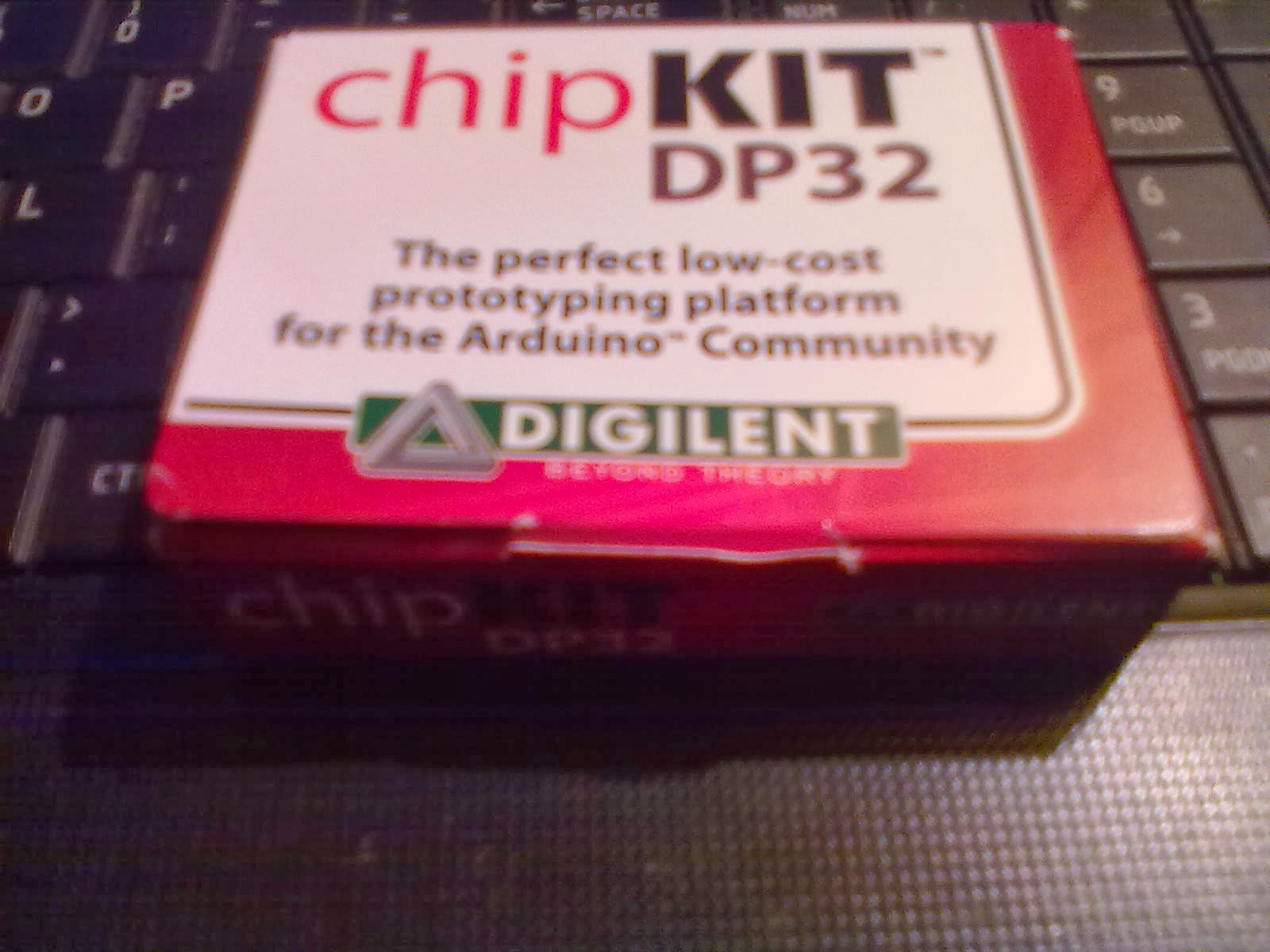
A DP32 chipKit from Dangerous prototypes... for free ?!? Yes Please !!


As some of you might have noticed, i love to dig into,  learn with, bash my head against, and ultimately discover new platforms. In my perspective it is essential to develop new and wide skills that ultimately will make one a better prepared and experienced programmer and engineer !
Recently i have been looking into the PIC32 as the most probable option to the Retro-inspired drum-synth i been developing for quite a while now, despite the fact i been using several chips along the way to develop ideas for the final version.

So, i took my chance and proposed an idea i been working in for a while, as part of a Dangerous Prototypes give-away with Microchip and Diligent in the form of a contest .
And guess what ?! I won !

QUOTE
Another winner is Ras B, and his idea for a CHipKit version of a Retro-Inspired Cynare Drum Synth scored him a chipKIT DP 32:
Id use the DP32 to make a CHipKit version of a Retro-Inspired Cynare Drum Synth( ADSR with variable exponential attack, LFO’s included) and some additional features ( Modulation related Like phaser, flanger and some basic reverb and delay- This through an additional memory chip to allow some leverage in the chips memory limitations) 
I am still working on implementing some of it, while a lot of it i have or am currently implementing it
* Funny thing was i was actually working on it when , during a break, i came across the news that i'd won !! :) .

I have already worked with the dip version of the PIC32 , even posted about it.
And i am not sure as yet, if all these features are all possible in a DIP version of it ( as it only runs at around 40 MHz, compared with th 80MHz of SMD versions).
But i vow to make a lighter version ( if need be) for the dip version, as i love it myself.
There are some limitations that might become an issue to take it as far as intend , due to the abstraction created by higher level languages as the "Arduino-based" used by the MPIDE. But, bit by bit (pass the pun) , i intend to present any limitations i might come across and reference them, so it helps anyone else !


Thursday, 8 August 2013

PIC32- Variable type defs

One of the main concerns about migrating/working with other type of uC’s ( 8 bits like AVR PIC, or 16 like PIC24 or the DSC’s dsPIC family), was how the 32 bit architecture will influence any previous code i might have regarding variable type definitions.
As its based on the GCC compiler, it is prepared for both ANSI with CCI compliance. Ill keep with the basics out of type defs.
The ANSI C Standard does indicate minimum requirements for these
types, as specified in .
* For more info on compiler compliance check the XC32 Compiler User guide in chapter “2.4.6 Sizes of Type


From researching the include files, one can get this info :

/* 7.18.1.1 Exact-width integer types */

typedef __signed char __int8_t;
typedef unsigned char __uint8_t;
typedef short int __int16_t;
typedef unsigned short int     __uint16_t;
typedef int __int32_t;
typedef unsigned int       __uint32_t;
#ifdef __COMPILER_INT64__
typedef __COMPILER_INT64__ __int64_t;
typedef __COMPILER_UINT64__    __uint64_t;
#elif defined(_LP64)
typedef long int __int64_t;
typedef unsigned long int      __uint64_t;
#else
/* LONGLONG */
__extension__ 
typedef long long int __int64_t;
/* LONGLONG */
__extension__ 
typedef unsigned long long int __uint64_t;
#endif

#define __BIT_TYPES_DEFINED__

Which gives us :

// MPLAB C32 range of Signed values
char c; // -128 to 127
short s; // -32,768 to 32,767
int i; // -2,147,483,648 to 2,147,483,647
long l; // -2,147,483,648 to 2,147,483,647

Of course, we also have the unsigned attribute:

//  MPLAB C32 range of  Unsigned values
unsigned char c; // 0 to 255
unsigned short s; // 0 to 65,535
unsigned int i; // 0 to 4,294,967,295
unsigned long l; // 0 to 4,294,967,295

For int, 4 bytes in the physical RAM is used.
So, if we do not have to use int and long, we should use char.
To hold one char variable, C32 compiler will use only 8 bits.
Another possibility is short type, which will use 16 bits to hold one short variable
PIC32‘s ALU  is performing all arithmetic operations in the same number of cycles for 32-bit, 16-bit or 8-bit integers, which turns the variable long into just a synonym of the basic integer type int.
It is ok from performance point of view, but it comes with a price.
The only limiting factor, preventing us from always using 32-bit integers , is the consideration of the internal resources , and in this case the RAM memory
*  keep the size of your variables to the minimum necessary; operating on bytes versus  word  can make a big difference in terms of code compactness/efficiency.

If really a large range of values is needed, we can use 64-bit types

//  C32 range of 64-bit type values
long long l; // ranges from -2 to the power of 63 to +2 to the power of 63-1
unsigned long long l; // ranges from 0 to +2 to the power of 64

//  C32 range of Floating point type values
float f; // 32-bit floating point
double d; // 64-bit floating point 
long double d; // 64-bit floating point, synonym of double

The long long integer type offers 64-bit support and requires 8 bytes of memory; So, we can expect a small performance decrease for using long long integers.

Ill leave  several excerpts from the header files...

/* 7.18.1.1 Exact-width integer types */

typedef __signed char __int8_t;
typedef unsigned char __uint8_t;
typedef short int __int16_t;
typedef unsigned short int     __uint16_t;
typedef int __int32_t;
typedef unsigned int       __uint32_t;
#ifdef __COMPILER_INT64__
typedef __COMPILER_INT64__ __int64_t;
typedef __COMPILER_UINT64__    __uint64_t;
#elif defined(_LP64)
typedef long int __int64_t;
typedef unsigned long int      __uint64_t;
#else
/* LONGLONG */
__extension__ 
typedef long long int __int64_t;
/* LONGLONG */
__extension__ 
typedef unsigned long long int __uint64_t;
#endif

#define __BIT_TYPES_DEFINED__

/* 7.18.1.4 Integer types capable of holding object pointers */

#ifdef _LP64
typedef long int       __intptr_t;
typedef unsigned long int     __uintptr_t;
#else
typedef int       __intptr_t;
typedef unsigned int      __uintptr_t;
#endif

#endif /* !_MIPS_INT_TYPES_H_ */


Also :

* 7.18.1.2 Minimum-width integer types */

__extension__
typedef __signed char  int_least8_t;
typedef unsigned char uint_least8_t;
typedef short int int_least16_t;
typedef unsigned short int uint_least16_t;
typedef int int_least24_t;
typedef unsigned int uint_least24_t;
typedef int int_least32_t;
typedef unsigned int uint_least32_t;
#ifdef __COMPILER_INT64__
typedef __COMPILER_INT64__ int_least64_t;
typedef __COMPILER_UINT64__ uint_least64_t;
#elif defined(_LP64)
typedef long int int_least64_t;
typedef unsigned long int uint_least64_t;
#else
/* LONGLONG */
__extension__
typedef long long int int_least64_t;
/* LONGLONG */
__extension__
typedef unsigned long long int uint_least64_t;
#endif

/* 7.18.1.3 Fastest minimum-width integer types */
typedef int   int_fast8_t;
typedef unsigned int  uint_fast8_t;
typedef int  int_fast16_t;
typedef unsigned int uint_fast16_t;
typedef int  int_fast24_t;
typedef unsigned int uint_fast24_t;
typedef int  int_fast32_t;
typedef unsigned int uint_fast32_t;
#ifdef __COMPILER_INT64__
typedef __COMPILER_INT64__  int_fast64_t;
typedef __COMPILER_UINT64__ uint_fast64_t;
#elif defined(_LP64)
typedef long int  int_fast64_t;
typedef unsigned long int uint_fast64_t;
#else
/* LONGLONG */
__extension__
typedef long long int  int_fast64_t;
/* LONGLONG */
__extension__
typedef unsigned long long int uint_fast64_t;
#endif

/* 7.18.1.5 Greatest-width integer types */

#ifdef __COMPILER_INT64__
typedef __COMPILER_INT64__      intmax_t;
typedef unsigned __COMPILER_INT64__  uintmax_t;
#elif defined(_LP64)
typedef long int      intmax_t;
typedef unsigned long int     uintmax_t;
#else
/* LONGLONG */
__extension__
typedef long long int      intmax_t;
/* LONGLONG */
__extension__
typedef unsigned long long int     uintmax_t;
#endif

#endif /* !_MIPS_INT_MWGWTYPES_H_ */


Regarding the limits of each type def...


/* $NetBSD: int_limits.h,v 1.3 2002/11/03 19:55:23 thorpej Exp $ */

/*-
 * Copyright (c) 2001 The NetBSD Foundation, Inc.
 * All rights reserved.
 */
...

/*
 * 7.18.2 Limits of specified-width integer types
 */

/* 7.18.2.1 Limits of exact-width integer types */

/* minimum values of exact-width signed integer types */
#define INT8_MIN (-0x7f-1) /* int8_t  */
#define INT16_MIN (-0x7fff-1) /* int16_t  */
#define INT32_MIN (-0x7fffffff-1) /* int32_t  */
#ifdef _LP64
#define INT64_MIN (-0x7fffffffffffffffL-1) /* int64_t  */
#else
#define INT64_MIN (-0x7fffffffffffffffLL-1) /* int64_t  */
#endif

/* maximum values of exact-width signed integer types */
#define INT8_MAX 0x7f /* int8_t  */
#define INT16_MAX 0x7fff /* int16_t  */
#define INT32_MAX 0x7fffffff /* int32_t  */
#ifdef _LP64
#define INT64_MAX 0x7fffffffffffffffL /* int64_t  */
#else
#define INT64_MAX 0x7fffffffffffffffLL /* int64_t  */
#endif

/* maximum values of exact-width unsigned integer types */
#define UINT8_MAX 0xffU /* uint8_t  */
#define UINT16_MAX 0xffffU /* uint16_t  */
#define UINT32_MAX 0xffffffffU /* uint32_t  */
#ifdef _LP64
#define UINT64_MAX 0xffffffffffffffffUL /* uint64_t  */
#else
#define UINT64_MAX 0xffffffffffffffffULL /* uint64_t  */
#endif

/* 7.18.2.2 Limits of minimum-width integer types */

/* minimum values of minimum-width signed integer types */
#define INT_LEAST8_MIN (-0x7f-1) /* int_least8_t  */
#define INT_LEAST16_MIN (-0x7fff-1) /* int_least16_t  */
#define INT_LEAST24_MIN (-0x7fffffff-1) /* int_least24_t  */
#define INT_LEAST32_MIN (-0x7fffffff-1) /* int_least32_t  */
#ifdef _LP64
#define INT_LEAST64_MIN (-0x7fffffffffffffffL-1) /* int_least64_t  */
#else
#define INT_LEAST64_MIN (-0x7fffffffffffffffLL-1) /* int_least64_t  */
#endif

/* maximum values of minimum-width signed integer types */
#define INT_LEAST8_MAX 0x7f /* int_least8_t  */
#define INT_LEAST16_MAX 0x7fff /* int_least16_t  */
#define INT_LEAST24_MAX 0x7fffffff /* int_least24_t  */
#define INT_LEAST32_MAX 0x7fffffff /* int_least32_t  */
#ifdef _LP64
#define INT_LEAST64_MAX 0x7fffffffffffffffL /* int_least64_t  */
#else
#define INT_LEAST64_MAX 0x7fffffffffffffffLL /* int_least64_t  */
#endif

/* maximum values of minimum-width unsigned integer types */
#define UINT_LEAST8_MAX 0xffU /* uint_least8_t  */
#define UINT_LEAST16_MAX 0xffffU /* uint_least16_t */
#define UINT_LEAST24_MAX 0xffffffffU /* uint_least24_t */
#define UINT_LEAST32_MAX 0xffffffffU /* uint_least32_t */
#ifdef _LP64
#define UINT_LEAST64_MAX 0xffffffffffffffffUL /* uint_least64_t */
#else
#define UINT_LEAST64_MAX 0xffffffffffffffffULL /* uint_least64_t */
#endif

/* 7.18.2.3 Limits of fastest minimum-width integer types */

/* minimum values of fastest minimum-width signed integer types */
#define INT_FAST8_MIN (-0x7fffffff-1) /* int_fast8_t  */
#define INT_FAST16_MIN (-0x7fffffff-1) /* int_fast16_t  */
#define INT_FAST24_MIN (-0x7fffffff-1) /* int_fast24_t  */
#define INT_FAST32_MIN (-0x7fffffff-1) /* int_fast32_t  */
#ifdef _LP64
#define INT_FAST64_MIN (-0x7fffffffffffffffL-1) /* int_fast64_t  */
#else
#define INT_FAST64_MIN (-0x7fffffffffffffffLL-1) /* int_fast64_t  */
#endif

/* maximum values of fastest minimum-width signed integer types */
#define INT_FAST8_MAX 0x7fffffff /* int_fast8_t  */
#define INT_FAST16_MAX 0x7fffffff /* int_fast16_t  */
#define INT_FAST24_MAX 0x7fffffff /* int_fast24_t  */
#define INT_FAST32_MAX 0x7fffffff /* int_fast32_t  */
#ifdef _LP64
#define INT_FAST64_MAX 0x7fffffffffffffffL /* int_fast64_t  */
#else
#define INT_FAST64_MAX 0x7fffffffffffffffLL /* int_fast64_t  */
#endif

/* maximum values of fastest minimum-width unsigned integer types */
#define UINT_FAST8_MAX 0xffffffffU /* uint_fast8_t  */
#define UINT_FAST16_MAX 0xffffffffU /* uint_fast16_t  */
#define UINT_FAST24_MAX 0xffffffffU /* uint_fast24_t  */
#define UINT_FAST32_MAX 0xffffffffU /* uint_fast32_t  */
#ifdef _LP64
#define UINT_FAST64_MAX 0xffffffffffffffffUL /* uint_fast64_t  */
#else
#define UINT_FAST64_MAX 0xffffffffffffffffULL /* uint_fast64_t  */
#endif

/* 7.18.2.4 Limits of integer types capable of holding object pointers */

#ifdef _LP64
#define INTPTR_MIN (-0x7fffffffffffffffL-1) /* intptr_t  */
#define INTPTR_MAX 0x7fffffffffffffffL /* intptr_t  */
#define UINTPTR_MAX 0xffffffffffffffffUL /* uintptr_t  */
#else
#define INTPTR_MIN (-0x7fffffff-1) /* intptr_t  */
#define INTPTR_MAX 0x7fffffff /* intptr_t  */
#define UINTPTR_MAX 0xffffffffU /* uintptr_t  */
#endif

/* 7.18.2.5 Limits of greatest-width integer types */

#ifdef _LP64
#define INTMAX_MIN (-0x7fffffffffffffffL-1) /* intmax_t  */
#define INTMAX_MAX 0x7fffffffffffffffL /* intmax_t  */
#define UINTMAX_MAX 0xffffffffffffffffUL /* uintmax_t  */
#else
#define INTMAX_MIN (-0x7fffffffffffffffLL-1) /* intmax_t  */
#define INTMAX_MAX 0x7fffffffffffffffLL /* intmax_t  */
#define UINTMAX_MAX 0xffffffffffffffffULL /* uintmax_t  */
#endif


/*
 * 7.18.3 Limits of other integer types
 */

/* limits of ptrdiff_t */
#ifdef _LP64
#define PTRDIFF_MIN (-0x7fffffffffffffffL-1) /* ptrdiff_t  */
#define PTRDIFF_MAX 0x7fffffffffffffffL /* ptrdiff_t  */
#else
#define PTRDIFF_MIN (-0x7fffffff-1) /* ptrdiff_t  */
#define PTRDIFF_MAX 0x7fffffff /* ptrdiff_t  */
#endif

/* limits of sig_atomic_t */
#define SIG_ATOMIC_MIN (-0x7fffffff-1) /* sig_atomic_t  */
#define SIG_ATOMIC_MAX 0x7fffffff /* sig_atomic_t  */

/* limit of size_t */
#ifdef _LP64
#define SIZE_MAX 0xffffffffffffffffUL /* size_t  */
#else
#define SIZE_MAX 0xffffffffU /* size_t  */
#endif

#ifndef WCHAR_MIN /* also possibly defined in */
/* limits of wchar_t */
#define WCHAR_MIN 0 /* wchar_t  */
#define WCHAR_MAX 0xffff /* wchar_t  */

/* limits of wint_t */
#define WINT_MIN (-0x7fffffff-1) /* wint_t  */
#define WINT_MAX 0x7fffffff /* wint_t  */
#endif

#endif /* !_MIPS_INT_LIMITS_H_ */


(1): http://ww1.microchip.com/downloads/en/DeviceDoc/51686F.pdf 
(2): http://www.youtube.com/watch?v=6FNKJSWuaJE

Tuesday, 6 August 2013

PIC32's : Some basics


*PIC32MX250F128B's datasheet is the same as PIC32MX110F016B
Among the many features available on a PIC32, to chose from, we should maybe start with the basic port operations...
On the Microchip datasheet (1), we can read the following, about some of the the key features of the I/O Ports module:
• Individual output pin open-drain enable/disable
• Individual input pin pull-up enable/disable
• Monitor select inputs and generate interrupt on mismatch condition
• Operate during CPU Sleep and Idle modes
• Fast bit manipulation using CLR, SET and INV registers ( mentioned previous article- see below).

Before reading and writing any I/O port, the correct registers of the desired pins should be properly configured .
Each I/O port has nine registers directly associated with the operation of the port and one control register. Each I/O port pin has a corresponding bit in these registers. Throughout this section, the letter ‘x’, refers to relevant port module ( TRISA, TRISB, TRISC, etc).
NOTE: Any bit and its associated data and control registers that is not valid for a particular device will be disabled and will read as zeros.

TRISx registers configure the data direction through port  pins; in other words, it determines whether a port pin is an input or an output:
If data direction bit is ‘1’, the pin is an input; If data direction bit is ‘0’, the t pin is an output
A read from a TRISx register reads the last value written to the TRISx register
* to note that all I/O pins are defined as inputs after a Power-on Reset
A write to a PORTx register writes to the corresponding LATx register (PORTx data latch).
Those I/O port pin(s) configured as outputs are updated.
The datasheet refers to the fact that a write to a PORTx register is the effectively the same as a write to a LATx register; they also note that a read from a PORTx register reads the synchronized signal applied to the pins
LATx registers act as PORTx data latch, and hold the data written to port I/O pin(s):
A write to a LATx register latches data to corresponding port I/O pins. And only those port pins configured as outputs are updated.
A read from LATx register reads the data held in the PORTx data latch, not from the port
 pins themselves.

You should check the file p32mx250f128b.h for a list of all definitions  names of the  Special-Function Registers (SFRs) of the device.
Inside, we can expect something like this( Port A basic registers as example):

 __TRISAbits_t;
extern volatile __TRISAbits_t TRISAbits __asm__ ("TRISA") __attribute__((section("sfrs")));
extern volatile unsigned int        TRISACLR __attribute__((section("sfrs")));
extern volatile unsigned int        TRISASET __attribute__((section("sfrs")));
extern volatile unsigned int        TRISAINV __attribute__((section("sfrs")));
extern volatile unsigned int        PORTA __attribute__((section("sfrs")));
typedef union {
  struct {
    unsigned RA0:1;
    unsigned RA1:1;
    unsigned RA2:1;
    unsigned RA3:1;
    unsigned RA4:1;
  };
  struct {
    unsigned w:32;
  };
} __PORTAbits_t;
extern volatile __PORTAbits_t PORTAbits __asm__ ("PORTA") __attribute__((section("sfrs")));
extern volatile unsigned int        PORTACLR __attribute__((section("sfrs")));
extern volatile unsigned int        PORTASET __attribute__((section("sfrs")));
extern volatile unsigned int        PORTAINV __attribute__((section("sfrs")));
extern volatile unsigned int        LATA __attribute__((section("sfrs")));
typedef union {
  struct {
    unsigned LATA0:1;
    unsigned LATA1:1;
    unsigned LATA2:1;
    unsigned LATA3:1;
    unsigned LATA4:1;
  };
  struct {
    unsigned w:32;
  };
} __LATAbits_t;
extern volatile __LATAbits_t LATAbits __asm__ ("LATA") __attribute__((section("sfrs")));
extern volatile unsigned int        LATACLR __attribute__((section("sfrs")));
extern volatile unsigned int        LATASET __attribute__((section("sfrs")));
extern volatile unsigned int        LATAINV __attribute__((section("sfrs")));
extern volatile unsigned int        ODCA __attribute__((section("sfrs")));
typedef struct {
  unsigned w:32;
}

So lets start with some basic code.
First, i would advise you with the priceless tool that is the Sim included in MPLab and MPLab X.

#include < p32xxxx.h >
/*
* We could include p32mx250f128b.h directly, but this way we make the code more  
* portable. 
*/
main()
{
int a;

#ifndef PIC32_STARTER_KIT
     /*The JTAG is on by default on POR.  A PIC32 Starter Kit uses the JTAG, but
     for other debug tool use, like ICD 3 and Real ICE, the JTAG should be off
     to free up the JTAG I/O */
     DDPCONbits.JTAGEN = 0;
  #endif

// init the needed registers:
TRISA = 0xff00; // PORTA pin 0..7 as output
    //  main loop:
while(1){
a=256;     // Variable to waste time
while (a --){
// While variable a decrements, we keep pin 0 on, for debug purposes
PORTA = 0x0001;     // turn pin 0 on
}
PORTA = 0; /* turn all pins off; notice that, without 0x prefix, the compiler assumes the default decimal radix */
}
}

From the previous article, we can remember the following :The PIC32  brings also a set of registers called SET, CLEAR, and INVERT.
When you write to any of these registers, the PIC32 performs the read-modify-write operation in a single clock, allowing  the ability to quickly manipulate I/O ports and bits.  This means that, you can toggle any general purpose I/O pin at the SYSCLK speed! This atomic bit manipulation capability means that  the SET, CLR, and INV operations cannot be interrupted.
For example, the LATA SFR is followed by LATACLR, LATASET, and LATAINV.  To clear a group of bits in the LATA register, you would write the corresponding mask values into the LATACLR register.
Similarly, a  write to the SET register would set the corresponding bits and a write to INV register would toggle the bits..
This of course, makes basic port operations much easier, as we can see from the next example !
So lets put it into practice
/*
Example 2
*/
#include < p32xxxx.h >

main() 
{
#ifndef PIC32_STARTER_KIT
     /*The JTAG is on by default on POR.  A PIC32 Starter Kit uses the JTAG, but
     for other debug tool use, like ICD 3 and Real ICE, the JTAG should be off
     to free up the JTAG I/O */
     DDPCONbits.JTAGEN = 0;
  #endif
 LATACLR  = 0x0001;     // RA0 Off  
 TRISACLR = 0x0001;     // RA0 as output  
      while(1)    
    {
LATAINV = 0x0001;// toggle RA0   
Nop();     //Kill time.
    }